Bathroom Remodeling in Philadelphia, PA
Licensed & insured contractor serving Philadelphia with quality bathroom remodeling services — founded in 2003, 23+ years of expertise
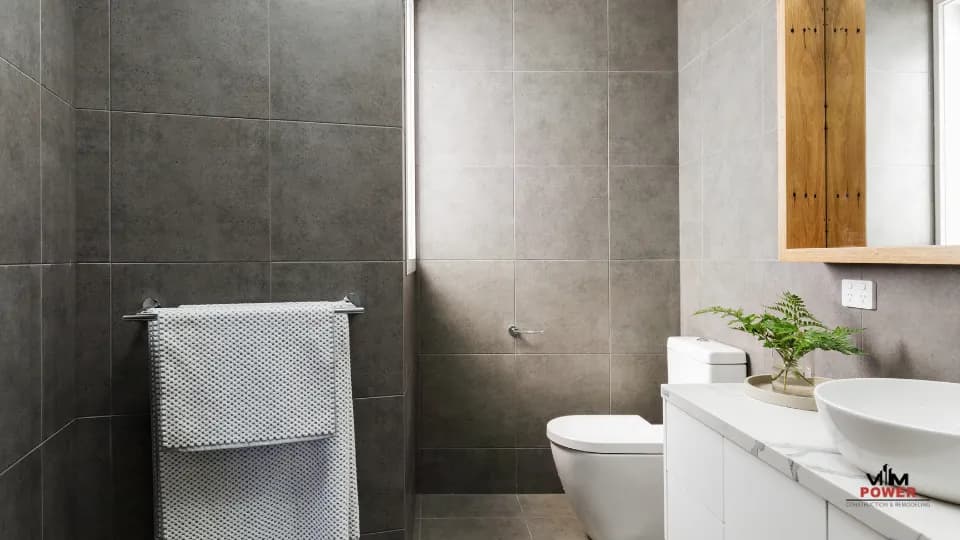
Professional Bathroom Remodeling Services in Philadelphia
VM Power Construction has been providing exceptional bathroom remodeling services to Philadelphia residents and businesses since 2003, drawing on 23+ years of hands-on construction expertise. As a fully licensed and insured contractor in Pennsylvania, we take pride in delivering quality craftsmanship and outstanding customer service to every project.
Bathroom renovation is one of the most valuable home improvements, offering both enhanced daily comfort and significant return on investment. In Pennsylvania and New Jersey homes, updated bathrooms are essential for both functionality and resale value. Modern bathroom renovations focus on creating spa-like retreats while addressing critical issues like water efficiency, mold prevention, and accessibility. Our comprehensive approach ensures your new bathroom combines luxury, practicality, and lasting value.
Why Choose VM Power for Bathroom Remodeling in Philadelphia?
- Local Philadelphia Expertise: Deep understanding of local building codes and historic district regulations.
- Increase home value by 10-20% with modern updates
- Reduce water bills with efficient fixtures (30-50% savings)
- Eliminate mold and water damage issues
- Create accessible, safe spaces for all ages
- Add luxury features like heated floors and steam showers
Our Bathroom Remodeling Process
We follow a systematic approach to ensure your project in Philadelphia is completed on time and to your satisfaction:
1
Consultation & Assessment
Thorough evaluation of your current bathroom and discussion of your vision
2
Design & Selection
Create detailed plans and help select all fixtures and finishes
3
Permits & Preparation
Secure necessary permits and prepare the work area
4
Demolition
Careful removal of existing fixtures and finishes
5
Rough-In Updates
Update plumbing and electrical systems to code
6
Installation
Install new fixtures, tile, and finishes
7
Finishing Touches
Complete detail work and final inspection
Bathroom Remodeling Costs in Philadelphia
We believe in transparency. While every project in Philadelphia is unique, here are typical cost ranges and factors:
Average Investment Range
$12,000 - $35,000
Key Cost Factors:
- Bathroom Size: Larger bathrooms require more materials and labor. A master bath costs 2-3x more than a powder room.
- Fixture Quality: Basic fixtures start at $2,000 while luxury suites can exceed $15,000.
- Plumbing Changes: Moving drain lines or fixtures adds $1,000-$5,000 in plumbing costs.
- Tile Selection: Tile costs vary from $500 to $5,000+ depending on material and coverage area.
Many homeowners use home equity loans or our financing partners for bathroom renovations. Projects over $15,000 often qualify for 0% interest promotional periods.
Bathroom Remodeling in Philadelphia: Local Context
Philadelphia's unique building landscape presents both challenges and opportunities. Our deep knowledge of city building codes, historic district requirements, and permit processes ensures your project moves smoothly. We understand Philadelphia's row home construction, which requires specialized skills for shared walls and compact spaces. The city's climate—humid summers and cold winters with significant freeze-thaw cycles—demands careful material selection and installation. We choose materials proven to withstand Philadelphia's weather while maintaining energy efficiency in both historic and modern homes. Our relationships with Philadelphia suppliers and understanding of local architectural styles ensure your renovation enhances both your home's value and neighborhood character. From preserving historic details in Old City to creating modern spaces in new developments, we respect Philadelphia's architectural heritage.
We handle bathroom remodeling throughout Philadelphia, including Northeast Philadelphia, Northwest Philadelphia, Center City, South Philadelphia, West Philadelphia, University City, Manayunk, Fishtown — ZIP codes 19102, 19103, 19104, 19106, 19107, 19130, 19146, 19147.
Local reference points near our Philadelphia projects: Independence Hall, Liberty Bell, Reading Terminal Market, Philadelphia Museum of Art, Citizens Bank Park, Rittenhouse Square. Philadelphia was established in 1682 and has a population of about 1,603,797, so housing stock ranges widely in age — which directly affects bathroom remodeling scope and permitting.
We also serve nearby: Northeast Philadelphia, Bucks County (20 minutes), Montgomery County (25 minutes), Delaware County (15 minutes), Camden, NJ (10 minutes).
Why bathrooms cost more per square foot than any other room
A bathroom concentrates plumbing, electrical, ventilation, waterproofing, and tile into the smallest floor area in the house. There is no low-consequence surface: every square foot either sheds water correctly or eventually fails. That density, not luxury finish selection, is why a small bathroom costs more per square foot than a large kitchen.
Waterproofing is the part you will never see and cannot skip
Tile is a wear surface, not a waterproof one. Behind it belongs a proper substrate and a continuous waterproofing layer, whether a sheet or liquid membrane over cement board or a bonded foam system. Shower pans need correct slope to the drain, corners and changes of plane need reinforcement, and niches and benches need to be pitched so water leaves rather than sits. Nearly every failed shower we are called to inspect failed at a detail — a corner, a curb, a niche — rather than in the open field of tile. A flood test before tile goes on costs a day and is worth it.
Ventilation sizing, not just ventilation
An undersized or poorly ducted exhaust fan is the root cause of most bathroom mould and peeling paint. The fan has to be sized to the room volume, ducted to the exterior in insulated rigid or semi-rigid duct with a real damper, and never terminated into an attic or soffit cavity. Venting a bathroom into an attic will produce condensation, staining, and eventually rot regardless of how good the tile work is.
Subcodes and inspection sequencing
A bathroom typically triggers plumbing and electrical subcodes at minimum, and mechanical if ventilation changes. Rough plumbing and rough electrical are inspected before anything is closed, and moving a toilet is more involved than moving a sink because waste line slope and venting are less forgiving. If the layout changes, expect the rough inspection to be the schedule's fixed point.
Accessibility decisions are cheapest during a remodel
Blocking for future grab bars, a curbless shower entry, a wider door, and a comfort-height vanity all cost very little while walls are open and are expensive to retrofit later. For anyone planning to stay in the house long term, these are the highest-value items in the scope even when they are not needed yet.
Why Philadelphia Homeowners Choose VM Power Construction
The Row Home Is a Different Building Type
Philadelphia's defining housing form changes almost every assumption a suburban renovation runs on. A row home shares structural party walls with its neighbours, has no side access, is typically narrow and deep with limited natural light in the middle, and often sits on a lot with no place to put a dumpster.
Structurally, the party wall is the constraint. It is frequently masonry shared between two properties, and altering anything near it is a coordination question as well as an engineering one. Floor joists commonly bear into that wall, which limits where openings can go and how they must be supported. Opening the ground floor into one long space — the most requested Philadelphia renovation — usually means a beam spanning most of the width with posts and footings carried down, not a header knocked in over a weekend.
Logistically, everything arrives and leaves through the front door. Demolition debris, cabinetry, tile, appliances, and lumber all move through the same narrow opening, often across a finished floor, often with permit-controlled street parking. We plan staging and protection around that rather than treating it as a nuisance discovered on day one.
Compact Sites, Older Systems
Philadelphia's older stock brings plaster over lath, framing that predates dimensional standards, and mechanical systems layered across generations. Original electrical service is frequently undersized for a modern kitchen load. Cast-iron waste stacks and galvanised supply lines reach an age where opening a wall for a bathroom means making a decision about the pipe you have just exposed. In a row home there is often no chase where a new duct or vent needs to run, and the honest answer sometimes involves a soffit rather than a promise that everything disappears inside the walls.
Narrow deep plans also mean daylight is a design problem. Where budget allows, a light well, a rear addition with glazing, or a stair reconfiguration does more for how the house feels than any finish upgrade.
City Permits and Historic Districts
Philadelphia permitting is its own discipline. Pennsylvania's Uniform Construction Code applies statewide but the city administers it, and projects in certified historic districts carry an additional review layer with its own standards for exterior work, windows, and street-facing detail. Zoning is separate from construction permitting and governs use, coverage, and height.
We establish which reviews apply before design is finalised, because a historic-district determination can change window specification and facade work entirely, and finding that out after drawings are complete means redrawing them.
Almost all of the city's row stock predates 1978, which brings the EPA Renovation, Repair and Painting rule into effect. We are EPA Lead-Safe RRP certified: sealed containment, HEPA-filtered cleanup, no high-heat or open-flame paint removal, verification before the space returns to use. With a neighbour on the other side of a shared wall, containment discipline is not just about your household.
Neighborhoods and ZIP Codes We Cover
- Center City and Rittenhouse Square area — dense sites, historic review likely
- Fishtown and Northeast Philadelphia
- South Philadelphia and West Philadelphia
- University City, Manayunk, Northwest Philadelphia
We work ZIP codes including 19102, 19103, 19104, 19106, 19107, and 19130.
Start Your Philadelphia Project
Call (484) 948-0279 for a free estimate. If the project involves opening the ground floor of a row home, expect the first visit to be about the party wall and the beam before anything else. Licensed PA HIC #PA158550, fully insured, EPA Lead-Safe RRP certified.
Frequently Asked Questions
Serving Philadelphia and Surrounding Areas
While based in the Lehigh Valley, we proudly serve Philadelphia and nearby communities. Our local presence means faster response times, better understanding of local preferences, and established relationships with area suppliers and subcontractors.
Ready to transform your Philadelphia home?
Fast response times for Philadelphia residents
Local PA building code expertise
Established relationships with Philadelphia suppliers
References from satisfied Philadelphia customers
Get Your Free Bathroom Remodeling Quote
(484) 948-0279
Request Free EstimateServing Philadelphia, PA and surrounding areas
Mon-Fri: 8:00 AM - 6:00 PM
Saturday: 9:00 AM - 3:00 PM
Other Services in Philadelphia
Why Choose VM Power?
- Licensed & Insured in PA
- A BBB Rating
- Free Detailed Estimates
- Quality Guaranteed
What Our Customers Say
Real Google reviews from homeowners we've worked with
Ready to Start Your Bathroom Remodeling Project in Philadelphia?
Get your free estimate today. No obligation, just honest pricing and expert advice.