Siding Installation in Trenton, NJ
Licensed & insured contractor serving Trenton with quality siding installation services — founded in 2003, 23+ years of expertise
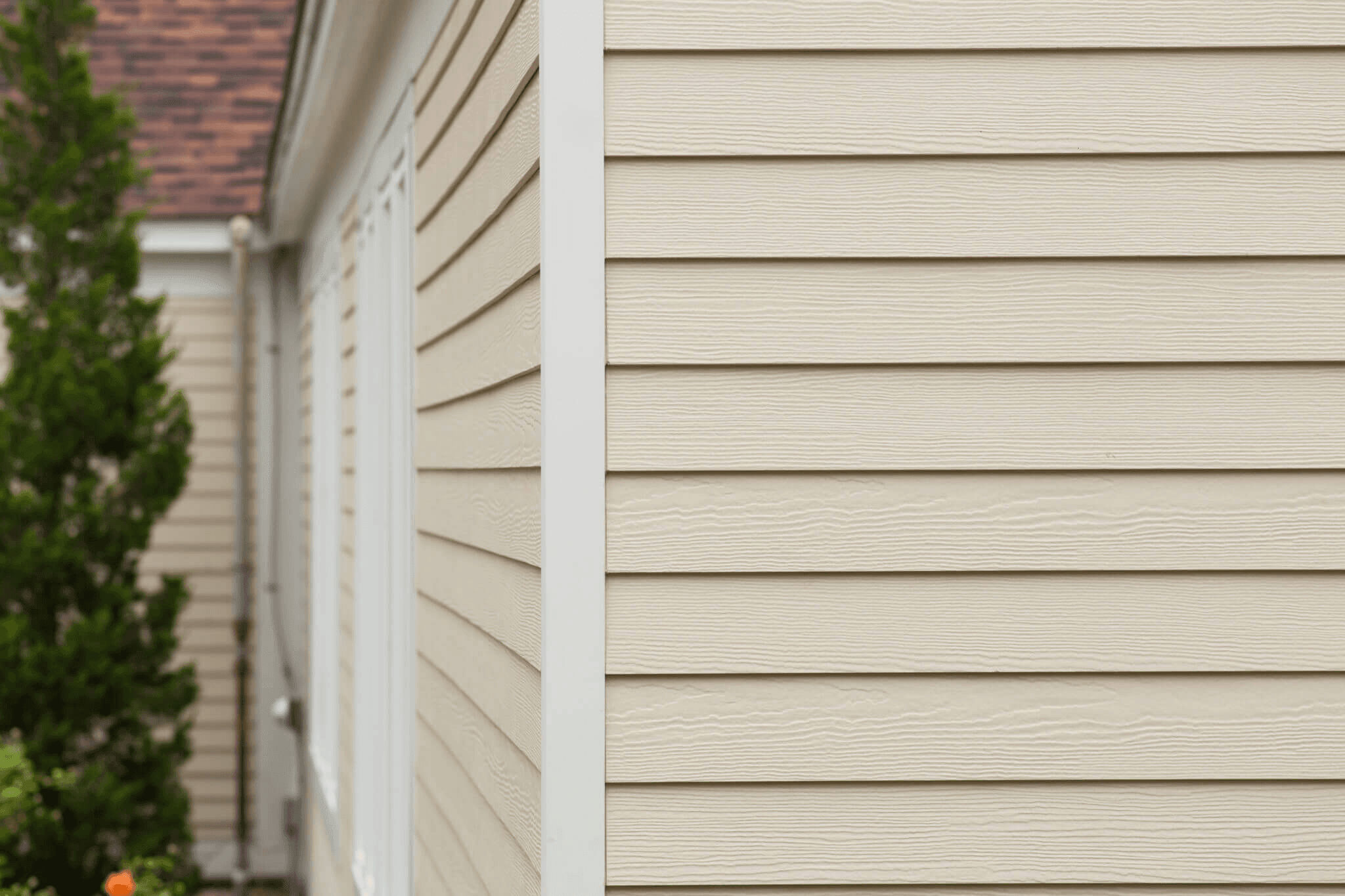
Professional Siding Installation Services in Trenton
VM Power Construction has been providing exceptional siding installation services to Trenton residents and businesses since 2003, drawing on 23+ years of hands-on construction expertise. As a fully licensed and insured contractor in Pennsylvania, we take pride in delivering quality craftsmanship and outstanding customer service to every project.
When Trenton NJ siding is part of a larger scope — a full exterior envelope refresh paired with new windows, a multi-unit property renovation, or an addition requiring matching siding — VM Power Construction coordinates the work alongside adjacent scopes under one NJ HIC #13VH11744800 contract.
Doing a siding installation-only project in Trenton? Visit VM Power Exteriors — siding-only specialist →
Siding is your home's shield and statement piece. In the demanding climate of Pennsylvania and New Jersey, your exterior must withstand freeze-thaw cycles, high winds, and intense UV exposure. When siding replacement is part of a larger renovation — paired with window upgrades, additions, or interior work — VM Power Construction manages the full scope as one coordinated project. For standalone siding, roofing, and gutter projects, our dedicated division VM Power Exteriors (vmpowerexteriors.com) brings specialized James Hardie Elite Preferred and VSI-certified expertise.
Why Choose VM Power for Siding Installation in Trenton?
- Local Trenton Expertise: Deep understanding of local building codes and historic district regulations.
- Boost curb appeal with modern designer colors and textures
- Reduce energy bills by up to 20% with insulated options
- Eliminate painting and rot with low-maintenance materials
- Protect structural integrity from moisture and pests
- Quieter interior with sound-dampening technology
Our Siding Installation Process
We follow a systematic approach to ensure your project in Trenton is completed on time and to your satisfaction:
1
Design & Discovery
We advise on style, color, and profiles to match your home's architecture.
2
Strip & Inspect
Removing the old skin to reveal and repair the skeleton.
3
Weatherproofing
Creating an airtight, watertight barrier.
4
Precision Install
Installing your new siding with laser-level accuracy.
5
Detailing & Capping
Custom aluminum work for a maintenance-free finish.
Siding Installation Costs in Trenton
We believe in transparency. While every project in Trenton is unique, here are typical cost ranges and factors:
Average Investment Range
$12,000 - $25,000 for typical 2-story home
Key Cost Factors:
- House Size & Shape: Multi-story homes and complex architectures with many corners cost more.
- Material Choice: Fiber cement costs 2x more than standard vinyl due to material and labor.
- Removal of Old Siding: Removing wood clapboard or asbestos siding adds complexity and cost.
- Trim & Accents: Custom window wraps, crown molding, and decorative shakes increase price.
Siding replacement is a significant investment. We offer flexible financing plans, often with 0% interest for initial periods, to make full exterior makeovers affordable.
Siding Installation in Trenton: Local Context
Trenton's rich history and diverse neighborhoods require specialized knowledge. Our understanding of New Jersey building codes, historic preservation requirements, and local permit processes ensures smooth project execution. We work closely with Trenton's building department and understand the nuances of Mercer County regulations. The city's proximity to the Delaware River means we understand flood zone considerations and proper waterproofing for basement and foundation work. Trenton's climate—similar to Pennsylvania but with slightly milder winters—allows for slightly longer construction seasons. Our familiarity with Trenton's neighborhoods, from historic districts to newer developments, helps us recommend appropriate designs and materials. We respect the architectural character that makes each neighborhood unique while incorporating modern amenities homeowners expect.
We handle siding installation throughout Trenton, including Mill Hill, Cadwalader Heights, Hiltonia, West Trenton, Chambersburg, North Trenton — ZIP codes 08608, 08609, 08610, 08611, 08618, 08619, 08638.
Local reference points near our Trenton projects: New Jersey State House, Old Barracks Museum, Trenton Battle Monument, Grounds for Sculpture, Trenton Thunder Stadium, Cadwalader Park. Trenton was established in 1719 and has a population of about 90,871, so housing stock ranges widely in age — which directly affects siding installation scope and permitting.
We also serve nearby: Hamilton Township (10 minutes), Ewing Township (5 minutes), Lawrence Township (8 minutes), Princeton (15 minutes), Bordentown (20 minutes), Yardley, PA (15 minutes).
Siding choice is a maintenance decision before it is an appearance decision
Vinyl, fiber cement, engineered wood, and aluminium differ less in how they look on day one than in what they ask of you over twenty years. Vinyl never needs painting but cannot be repainted, dents under impact, and shows seams. Fiber cement holds paint exceptionally well and resists impact and fire, but it is heavy, cuts produce silica dust, and it will need repainting on a long cycle. Engineered wood installs lighter and takes paint well but is less forgiving of standing water at cut ends.
What is behind the siding matters more than the siding
Cladding is a rain screen, not a waterproof shell. The assembly that actually keeps a wall dry is the water-resistive barrier behind it, correctly lapped and integrated with flashing at every opening, plus a drainage path that lets incidental water get out. Window and door head flashing, kick-out flashing where a roof meets a wall, and proper treatment at deck ledgers and penetrations are where walls fail. A re-side is the one opportunity in a building's life to correct all of that, and skipping it to save a day is how a beautiful new wall rots from behind.
Tear-off tells you what you are dealing with
Siding over siding hides sheathing condition, existing water damage, and previous flashing errors. On tear-off we look for staining below windows, soft sheathing at corners and near grade, and evidence of prior repairs. That inspection is also the moment to make an insulation decision: continuous exterior insulation or house wrap upgrades cost far less when the wall is already open than as a separate project later.
Freeze-thaw, moisture, and expansion
This climate cycles hard between freezing and thawing, and it is unforgiving of installation shortcuts. Vinyl must be hung with room to move — nailed to allow lateral expansion, never face-nailed tight — or panels will buckle in summer heat and crack in deep cold. Fiber cement needs correct gapping at butt joints and trim with the specified treatment at cut ends. Ground clearance at grade is not cosmetic: siding held too close to soil or mulch wicks moisture continuously.
What to compare between quotes
Look for the water-resistive barrier specified by name, whether all flashing is new, whether trim and soffit and fascia are included or excluded, insulation treatment, tear-off versus overlay, and how many squares are actually being covered. Those lines are where quotes diverge, not the panel colour.
Why Trenton Homeowners Choose VM Power Construction
River Proximity Decides the Below-Grade Scope
Trenton sits on the Delaware, and that single geographic fact drives more renovation decisions here than architectural style does. Flood zone status is a design input, not a paperwork step: it affects what can be built below a certain elevation, how mechanical equipment should be located, and whether a finished basement is a good idea at all on a given property.
We establish flood zone status early, because it changes the recommendation rather than just the filing. Where basement finishing is appropriate, it starts with water management as the design: exterior grading corrected away from the structure, downspouts discharged well clear of the foundation, interior perimeter drainage where conditions justify it, a real vapor strategy against the foundation wall, and mechanical equipment positioned with elevation in mind. Framing goes in after that is resolved, not before. A finished basement built without answering the water question first is a remediation project waiting on a wet season.
A Capital City With Protected Neighborhoods
Trenton's housing runs from the historic fabric of Mill Hill through the substantial homes of Cadwalader Heights and Hiltonia to the dense blocks of Chambersburg and North Trenton. Mill Hill in particular is early, tightly built, and architecturally protected in ways that constrain exterior work — windows, facade detail, and street-facing changes carry review considerations that a project in West Trenton does not.
That variation is why a Trenton estimate cannot be generic. A Cadwalader Heights kitchen and a Chambersburg row-block kitchen are different projects in structure, access, and permitting even when the finish schedule is identical.
New Jersey Permits and Mercer County
New Jersey requires construction permits for nearly all decks, additions, and structural work regardless of size — noticeably stricter than Pennsylvania across the river. Permits are issued under the statewide Uniform Construction Code through the city's construction office, split into building, electrical, plumbing, and fire protection subcodes, each reviewed and inspected separately at defined stages. Mercer County and, for flood-zone work, additional state considerations can come into play on larger projects. Zoning runs on its own track and governs coverage, setbacks, and height.
Rough inspections happen before anything closes up, which means the drywall date follows the inspection date. We file the permits, book the inspections, and are explicit about which parts of the timeline we control.
Most of the older inventory predates 1978, bringing the EPA Renovation, Repair and Painting rule into effect. We are EPA Lead-Safe RRP certified and work accordingly: containment, HEPA cleanup, no open flame or high heat on painted surfaces, verification before handover.
Neighborhoods and ZIP Codes We Cover
- Mill Hill — historic fabric, exterior review considerations
- Cadwalader Heights and Hiltonia — larger homes, addition potential
- Chambersburg and North Trenton — dense blocks, compact sites
- West Trenton
We work ZIP codes including 08608, 08609, 08610, 08611, 08618, and 08619.
Serving Mercer County
Ewing is five minutes out, with Lawrence Township, Hamilton Township, Bordentown, and Princeton all short runs. On flood-zone and drainage work, being able to get back to a site after heavy rain is practically useful.
Start Your Trenton Project
Call (484) 948-0279 for a free estimate. If a basement is part of the plan, expect the first conversation to be about water and elevation. Licensed NJ HIC #13VH11744800, fully insured, EPA Lead-Safe RRP certified.
Frequently Asked Questions
Serving Trenton and Surrounding Areas
While based in the Lehigh Valley, we proudly serve Trenton and nearby communities. Our local presence means faster response times, better understanding of local preferences, and established relationships with area suppliers and subcontractors.
Ready to transform your Trenton home?
Fast response times for Trenton residents
Local NJ building code expertise
Established relationships with Trenton suppliers
References from satisfied Trenton customers
Get Your Free Siding Installation Quote
(484) 948-0279
Request Free EstimateServing Trenton, NJ and surrounding areas
Mon-Fri: 8:00 AM - 6:00 PM
Saturday: 9:00 AM - 3:00 PM
Other Services in Trenton
Why Choose VM Power?
- Licensed & Insured in NJ
- A BBB Rating
- Free Detailed Estimates
- Quality Guaranteed
What Our Customers Say
Real Google reviews from homeowners we've worked with
Ready to Start Your Siding Installation Project in Trenton?
Get your free estimate today. No obligation, just honest pricing and expert advice.