Roofing Services in Trenton, NJ
Licensed & insured contractor serving Trenton with quality roofing services services — founded in 2003, 23+ years of expertise
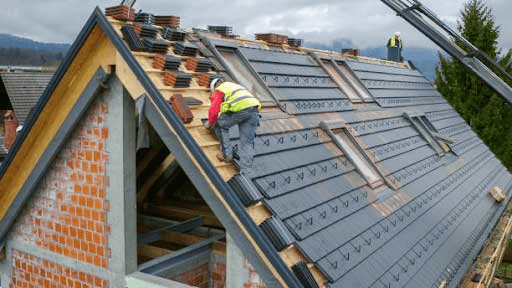
Professional Roofing Services Services in Trenton
VM Power Construction has been providing exceptional roofing services services to Trenton residents and businesses since 2003, drawing on 23+ years of hands-on construction expertise. As a fully licensed and insured contractor in Pennsylvania, we take pride in delivering quality craftsmanship and outstanding customer service to every project.
When roofing is one scope of a larger Trenton NJ project — a whole-home exterior refresh, a multi-family property renovation requiring coordinated trades, or an addition that ties into a new roof section — VM Power Construction manages the work as your licensed NJ HIC #13VH11744800 general contractor.
Doing a roofing services-only project in Trenton? Visit VM Power Exteriors — roofing-only specialist →
Your roof is your home's first line of defense against Pennsylvania and New Jersey's diverse weather conditions. From heavy snow loads to summer storms, a quality roof protects your entire investment. When roofing is part of a larger renovation — additions, kitchens, bathrooms, or whole-home projects — VM Power Construction coordinates everything under one timeline and one crew. For standalone roofing, siding, and gutter projects, our dedicated division VM Power Exteriors (vmpowerexteriors.com) specializes exclusively in exterior work with GAF Master Elite and James Hardie certifications.
Why Choose VM Power for Roofing Services in Trenton?
- Local Trenton Expertise: Deep understanding of local building codes and historic district regulations.
- Protect home from water damage and structural issues
- Increase property value by 5-10% with new roof
- Reduce energy costs with proper ventilation and insulation
- Eliminate emergency repairs and leak concerns
- Enhance curb appeal with modern materials and colors
Our Roofing Services Process
We follow a systematic approach to ensure your project in Trenton is completed on time and to your satisfaction:
1
Drone Inspection & Quote
We use high-res drones to map your roof and identify damage without risk.
2
Property Protection
We treat your home like ours, protecting landscaping and driveways.
3
Tear-Off & Decking
Complete removal of old layers to inspect the structural wood underneath.
4
Waterproofing & Install
Installing the complete weather system from the deck up.
5
Magnet Sweep & Cleanup
Thorough cleanup to ensure safety for pets and tires.
Roofing Services in Trenton: Local Context
Trenton's rich history and diverse neighborhoods require specialized knowledge. Our understanding of New Jersey building codes, historic preservation requirements, and local permit processes ensures smooth project execution. We work closely with Trenton's building department and understand the nuances of Mercer County regulations. The city's proximity to the Delaware River means we understand flood zone considerations and proper waterproofing for basement and foundation work. Trenton's climate—similar to Pennsylvania but with slightly milder winters—allows for slightly longer construction seasons. Our familiarity with Trenton's neighborhoods, from historic districts to newer developments, helps us recommend appropriate designs and materials. We respect the architectural character that makes each neighborhood unique while incorporating modern amenities homeowners expect.
We handle roofing services throughout Trenton, including Mill Hill, Cadwalader Heights, Hiltonia, West Trenton, Chambersburg, North Trenton — ZIP codes 08608, 08609, 08610, 08611, 08618, 08619, 08638.
Local reference points near our Trenton projects: New Jersey State House, Old Barracks Museum, Trenton Battle Monument, Grounds for Sculpture, Trenton Thunder Stadium, Cadwalader Park. Trenton was established in 1719 and has a population of about 90,871, so housing stock ranges widely in age — which directly affects roofing services scope and permitting.
We also serve nearby: Hamilton Township (10 minutes), Ewing Township (5 minutes), Lawrence Township (8 minutes), Princeton (15 minutes), Bordentown (20 minutes), Yardley, PA (15 minutes).
How to tell a roof needs replacing rather than repairing
Age plus evidence decides it. Architectural asphalt shingles generally last 20 to 30 years in this climate; three-tab shingles less. Replacement is the right call when granule loss is widespread, shingles are curling or cupping across whole planes rather than in isolated spots, there is more than one existing layer, or the deck feels soft underfoot. A single wind-lifted section on an otherwise sound ten-year-old roof is a repair.
The deck and the details, not the shingle brand
Most roof failures are not shingle failures. They happen at penetrations, valleys, and transitions — chimney and sidewall flashing, step flashing that was face-nailed or reused, valley detailing, and pipe boots whose rubber collars perish long before the field shingles do. When we tear off, sheathing gets inspected for delamination and soft spots, and rotten decking is replaced rather than covered. Reusing old flashing to save money on a full replacement is the most common false economy in roofing.
Ventilation and ice: the two things this climate punishes
Freeze-thaw cycling makes attic ventilation and ice-dam protection genuinely consequential here, not optional upgrades. Balanced intake at the soffit and exhaust at the ridge keeps the deck cold enough that snow does not melt, run to a cold eave, and refreeze into a dam that forces water back under the shingles. Ice-and-water membrane at eaves and in valleys is the second half of that defence. A roof with a premium shingle and no intake ventilation will underperform a mid-grade roof that breathes.
Layers, permits, and what tear-off actually buys
Roofing over an existing layer is faster and cheaper and it hides everything: you cannot inspect a deck you did not expose, flashing rarely gets done properly, and the assembly gets heavier and hotter. Full tear-off is what lets the deck, flashing, and ventilation be corrected. Re-roofing generally requires a permit and inspection, and code limits how many layers may remain.
Reading a roofing estimate
Comparable quotes should specify tear-off versus overlay, number of layers removed, underlayment type and coverage, ice-and-water placement, all new flashing versus reused, ridge and intake ventilation, decking replacement allowance, and the workmanship warranty separate from the manufacturer's. A materially cheaper quote is usually cheaper at one of those lines.
Why Trenton Homeowners Choose VM Power Construction
River Proximity Decides the Below-Grade Scope
Trenton sits on the Delaware, and that single geographic fact drives more renovation decisions here than architectural style does. Flood zone status is a design input, not a paperwork step: it affects what can be built below a certain elevation, how mechanical equipment should be located, and whether a finished basement is a good idea at all on a given property.
We establish flood zone status early, because it changes the recommendation rather than just the filing. Where basement finishing is appropriate, it starts with water management as the design: exterior grading corrected away from the structure, downspouts discharged well clear of the foundation, interior perimeter drainage where conditions justify it, a real vapor strategy against the foundation wall, and mechanical equipment positioned with elevation in mind. Framing goes in after that is resolved, not before. A finished basement built without answering the water question first is a remediation project waiting on a wet season.
A Capital City With Protected Neighborhoods
Trenton's housing runs from the historic fabric of Mill Hill through the substantial homes of Cadwalader Heights and Hiltonia to the dense blocks of Chambersburg and North Trenton. Mill Hill in particular is early, tightly built, and architecturally protected in ways that constrain exterior work — windows, facade detail, and street-facing changes carry review considerations that a project in West Trenton does not.
That variation is why a Trenton estimate cannot be generic. A Cadwalader Heights kitchen and a Chambersburg row-block kitchen are different projects in structure, access, and permitting even when the finish schedule is identical.
New Jersey Permits and Mercer County
New Jersey requires construction permits for nearly all decks, additions, and structural work regardless of size — noticeably stricter than Pennsylvania across the river. Permits are issued under the statewide Uniform Construction Code through the city's construction office, split into building, electrical, plumbing, and fire protection subcodes, each reviewed and inspected separately at defined stages. Mercer County and, for flood-zone work, additional state considerations can come into play on larger projects. Zoning runs on its own track and governs coverage, setbacks, and height.
Rough inspections happen before anything closes up, which means the drywall date follows the inspection date. We file the permits, book the inspections, and are explicit about which parts of the timeline we control.
Most of the older inventory predates 1978, bringing the EPA Renovation, Repair and Painting rule into effect. We are EPA Lead-Safe RRP certified and work accordingly: containment, HEPA cleanup, no open flame or high heat on painted surfaces, verification before handover.
Neighborhoods and ZIP Codes We Cover
- Mill Hill — historic fabric, exterior review considerations
- Cadwalader Heights and Hiltonia — larger homes, addition potential
- Chambersburg and North Trenton — dense blocks, compact sites
- West Trenton
We work ZIP codes including 08608, 08609, 08610, 08611, 08618, and 08619.
Serving Mercer County
Ewing is five minutes out, with Lawrence Township, Hamilton Township, Bordentown, and Princeton all short runs. On flood-zone and drainage work, being able to get back to a site after heavy rain is practically useful.
Start Your Trenton Project
Call (484) 948-0279 for a free estimate. If a basement is part of the plan, expect the first conversation to be about water and elevation. Licensed NJ HIC #13VH11744800, fully insured, EPA Lead-Safe RRP certified.
Frequently Asked Questions
Serving Trenton and Surrounding Areas
While based in the Lehigh Valley, we proudly serve Trenton and nearby communities. Our local presence means faster response times, better understanding of local preferences, and established relationships with area suppliers and subcontractors.
Ready to transform your Trenton home?
Fast response times for Trenton residents
Local NJ building code expertise
Established relationships with Trenton suppliers
References from satisfied Trenton customers
Get Your Free Roofing Services Quote
(484) 948-0279
Request Free EstimateServing Trenton, NJ and surrounding areas
Mon-Fri: 8:00 AM - 6:00 PM
Saturday: 9:00 AM - 3:00 PM
Other Services in Trenton
Why Choose VM Power?
- Licensed & Insured in NJ
- A BBB Rating
- Free Detailed Estimates
- Quality Guaranteed
What Our Customers Say
Real Google reviews from homeowners we've worked with
Ready to Start Your Roofing Services Project in Trenton?
Get your free estimate today. No obligation, just honest pricing and expert advice.