Deck Building in Trenton, NJ
Licensed & insured contractor serving Trenton with quality deck building services — founded in 2003, 23+ years of expertise
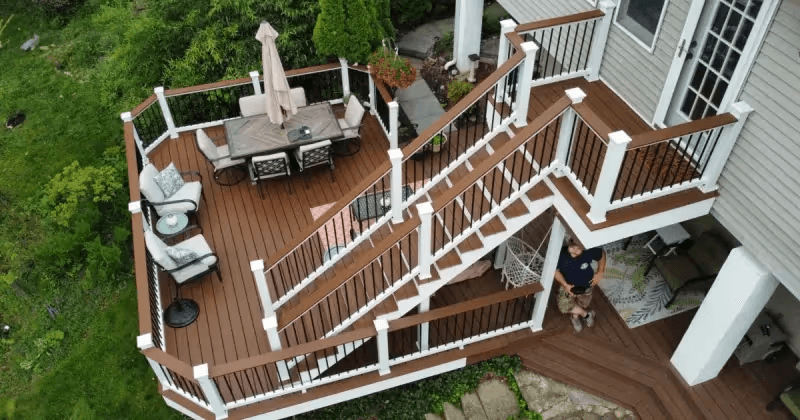
Professional Deck Building Services in Trenton
VM Power Construction has been providing exceptional deck building services to Trenton residents and businesses since 2003, drawing on 23+ years of hands-on construction expertise. As a fully licensed and insured contractor in Pennsylvania, we take pride in delivering quality craftsmanship and outstanding customer service to every project.
When a Trenton deck is one scope of a larger NJ project — a multi-family property renovation, a whole-home refresh that includes outdoor living, or an addition that extends onto a new deck — VM Power Construction coordinates deck work with the full scope as your licensed NJ HIC #13VH11744800 general contractor.
Doing a deck building-only project in Trenton? Visit VM Power Decks — deck-only specialist →
Transform your backyard into an outdoor oasis with a custom-built deck that extends your living space into nature. In the Mid-Atlantic climate, decks provide valuable three-season living space for entertaining, relaxation, and family gatherings. Modern deck construction goes beyond simple platforms - today's decks feature multiple levels, built-in seating, lighting, and even outdoor kitchens. Our expertise ensures your deck not only looks beautiful but meets all safety codes and provides decades of enjoyment.
Why Choose VM Power for Deck Building in Trenton?
- Local Trenton Expertise: Deep understanding of local building codes and historic district regulations.
- Add 200-500+ sq ft of outdoor living space
- Increase home value by 70-80% of deck cost
- Create perfect entertaining space for gatherings
- Enjoy outdoor living April through November
- Improve backyard access and flow
Our Deck Building Process
We follow a systematic approach to ensure your project in Trenton is completed on time and to your satisfaction:
1
Site Assessment & Design
Evaluate your property and create custom deck design
2
Permits & Approvals
Secure necessary permits and HOA approvals
3
Layout & Excavation
Mark deck location and prepare foundation points
4
Foundation & Framing
Pour footings and construct deck frame
5
Decking & Railings
Install decking boards and safety railings
6
Features & Finishing
Add special features and complete all details
Deck Building Costs in Trenton
We believe in transparency. While every project in Trenton is unique, here are typical cost ranges and factors:
Average Investment Range
$5,000 - $20,000 for typical 300-400 sq ft deck
Key Cost Factors:
- Deck Size: Larger decks have lower per-square-foot costs. Small decks under 200 sq ft cost proportionally more.
- Height Above Ground: Second-story decks cost 30-50% more due to additional structure and safety requirements.
- Site Conditions: Slopes, poor soil, or difficult access add $2,000-$8,000 to foundation costs.
- Design Complexity: Multiple levels, angles, and curves increase labor and material costs by 15-30%.
Deck additions typically return 70-80% at resale. Many homeowners use home equity lines or our financing partners for these improvements.
Deck Building in Trenton: Local Context
Trenton's rich history and diverse neighborhoods require specialized knowledge. Our understanding of New Jersey building codes, historic preservation requirements, and local permit processes ensures smooth project execution. We work closely with Trenton's building department and understand the nuances of Mercer County regulations. The city's proximity to the Delaware River means we understand flood zone considerations and proper waterproofing for basement and foundation work. Trenton's climate—similar to Pennsylvania but with slightly milder winters—allows for slightly longer construction seasons. Our familiarity with Trenton's neighborhoods, from historic districts to newer developments, helps us recommend appropriate designs and materials. We respect the architectural character that makes each neighborhood unique while incorporating modern amenities homeowners expect.
We handle deck building throughout Trenton, including Mill Hill, Cadwalader Heights, Hiltonia, West Trenton, Chambersburg, North Trenton — ZIP codes 08608, 08609, 08610, 08611, 08618, 08619, 08638.
Local reference points near our Trenton projects: New Jersey State House, Old Barracks Museum, Trenton Battle Monument, Grounds for Sculpture, Trenton Thunder Stadium, Cadwalader Park. Trenton was established in 1719 and has a population of about 90,871, so housing stock ranges widely in age — which directly affects deck building scope and permitting.
We also serve nearby: Hamilton Township (10 minutes), Ewing Township (5 minutes), Lawrence Township (8 minutes), Princeton (15 minutes), Bordentown (20 minutes), Yardley, PA (15 minutes).
The two decisions that define a deck: framing and connection
Homeowners choose decks by decking material. Decks fail by framing and attachment. Pressure-treated framing sized to span, footings below frost depth, proper joist spacing for the chosen decking, and a correctly flashed and bolted ledger connection are what make a deck last and stay safe. Decking is the part you see; framing is the part that holds you up.
The ledger is the highest-consequence detail on the whole build
Most catastrophic deck collapses are ledger failures, and most ledger failures come from two causes: attachment with nails or undersized lag screws instead of properly sized and spaced through-bolts or structural screws, and missing flashing that lets water sit against the rim joist until it rots. That connection must be flashed so water is directed out and away, and fastened to a pattern the load actually requires. A deck can look immaculate and still be attached to a house by a rotting board.
Footings, frost, and clay
Footings must bear below the local frost line, on undisturbed soil, sized for the load they carry. In clay-heavy soils, frost heave and seasonal movement are real, and a footing set too shallow will lift and drop the structure through the seasons until connections loosen and the frame racks. Backfill around footings should be properly compacted rather than loose spoil.
Decking materials, honestly compared
Pressure-treated is the lowest cost and needs cleaning and re-sealing on a regular cycle to stay presentable. Composite and PVC cost substantially more up front and eliminate sealing, though composite can get hot underfoot in direct sun and lower-grade boards can fade unevenly. PVC is the most stable and the most expensive. There is no maintenance-free option; there are only different maintenance tradeoffs, and the honest comparison is total cost over fifteen years rather than the price of the boards.
Permits, railings, and stairs
Deck permitting depends on height above grade and jurisdiction, and New Jersey is materially stricter than Pennsylvania on when a permit is required. Railing height, baluster spacing, and graspable handrail profiles are code-specified, and stair geometry — consistent rise and run within tight tolerance — is both a code item and the most common inspection failure on otherwise good work. Guard and railing assemblies also have to resist real lateral load, which means the post connections matter as much as the rail.
Why Trenton Homeowners Choose VM Power Construction
River Proximity Decides the Below-Grade Scope
Trenton sits on the Delaware, and that single geographic fact drives more renovation decisions here than architectural style does. Flood zone status is a design input, not a paperwork step: it affects what can be built below a certain elevation, how mechanical equipment should be located, and whether a finished basement is a good idea at all on a given property.
We establish flood zone status early, because it changes the recommendation rather than just the filing. Where basement finishing is appropriate, it starts with water management as the design: exterior grading corrected away from the structure, downspouts discharged well clear of the foundation, interior perimeter drainage where conditions justify it, a real vapor strategy against the foundation wall, and mechanical equipment positioned with elevation in mind. Framing goes in after that is resolved, not before. A finished basement built without answering the water question first is a remediation project waiting on a wet season.
A Capital City With Protected Neighborhoods
Trenton's housing runs from the historic fabric of Mill Hill through the substantial homes of Cadwalader Heights and Hiltonia to the dense blocks of Chambersburg and North Trenton. Mill Hill in particular is early, tightly built, and architecturally protected in ways that constrain exterior work — windows, facade detail, and street-facing changes carry review considerations that a project in West Trenton does not.
That variation is why a Trenton estimate cannot be generic. A Cadwalader Heights kitchen and a Chambersburg row-block kitchen are different projects in structure, access, and permitting even when the finish schedule is identical.
New Jersey Permits and Mercer County
New Jersey requires construction permits for nearly all decks, additions, and structural work regardless of size — noticeably stricter than Pennsylvania across the river. Permits are issued under the statewide Uniform Construction Code through the city's construction office, split into building, electrical, plumbing, and fire protection subcodes, each reviewed and inspected separately at defined stages. Mercer County and, for flood-zone work, additional state considerations can come into play on larger projects. Zoning runs on its own track and governs coverage, setbacks, and height.
Rough inspections happen before anything closes up, which means the drywall date follows the inspection date. We file the permits, book the inspections, and are explicit about which parts of the timeline we control.
Most of the older inventory predates 1978, bringing the EPA Renovation, Repair and Painting rule into effect. We are EPA Lead-Safe RRP certified and work accordingly: containment, HEPA cleanup, no open flame or high heat on painted surfaces, verification before handover.
Neighborhoods and ZIP Codes We Cover
- Mill Hill — historic fabric, exterior review considerations
- Cadwalader Heights and Hiltonia — larger homes, addition potential
- Chambersburg and North Trenton — dense blocks, compact sites
- West Trenton
We work ZIP codes including 08608, 08609, 08610, 08611, 08618, and 08619.
Serving Mercer County
Ewing is five minutes out, with Lawrence Township, Hamilton Township, Bordentown, and Princeton all short runs. On flood-zone and drainage work, being able to get back to a site after heavy rain is practically useful.
Start Your Trenton Project
Call (484) 948-0279 for a free estimate. If a basement is part of the plan, expect the first conversation to be about water and elevation. Licensed NJ HIC #13VH11744800, fully insured, EPA Lead-Safe RRP certified.
Frequently Asked Questions
Serving Trenton and Surrounding Areas
While based in the Lehigh Valley, we proudly serve Trenton and nearby communities. Our local presence means faster response times, better understanding of local preferences, and established relationships with area suppliers and subcontractors.
Ready to transform your Trenton home?
Fast response times for Trenton residents
Local NJ building code expertise
Established relationships with Trenton suppliers
References from satisfied Trenton customers
Get Your Free Deck Building Quote
(484) 948-0279
Request Free EstimateServing Trenton, NJ and surrounding areas
Mon-Fri: 8:00 AM - 6:00 PM
Saturday: 9:00 AM - 3:00 PM
Other Services in Trenton
Why Choose VM Power?
- Licensed & Insured in NJ
- A BBB Rating
- Free Detailed Estimates
- Quality Guaranteed
What Our Customers Say
Real Google reviews from homeowners we've worked with
Ready to Start Your Deck Building Project in Trenton?
Get your free estimate today. No obligation, just honest pricing and expert advice.